Learning structural fingerprints for crystal discovery
Built and evaluated a scalable pipeline for classifying simulated colloidal crystals, matching known structures, and flagging unfamiliar structural families for further investigation.
Yale University · New Haven, CT
Molecular biophysics, applied mathematics, and machine learning.
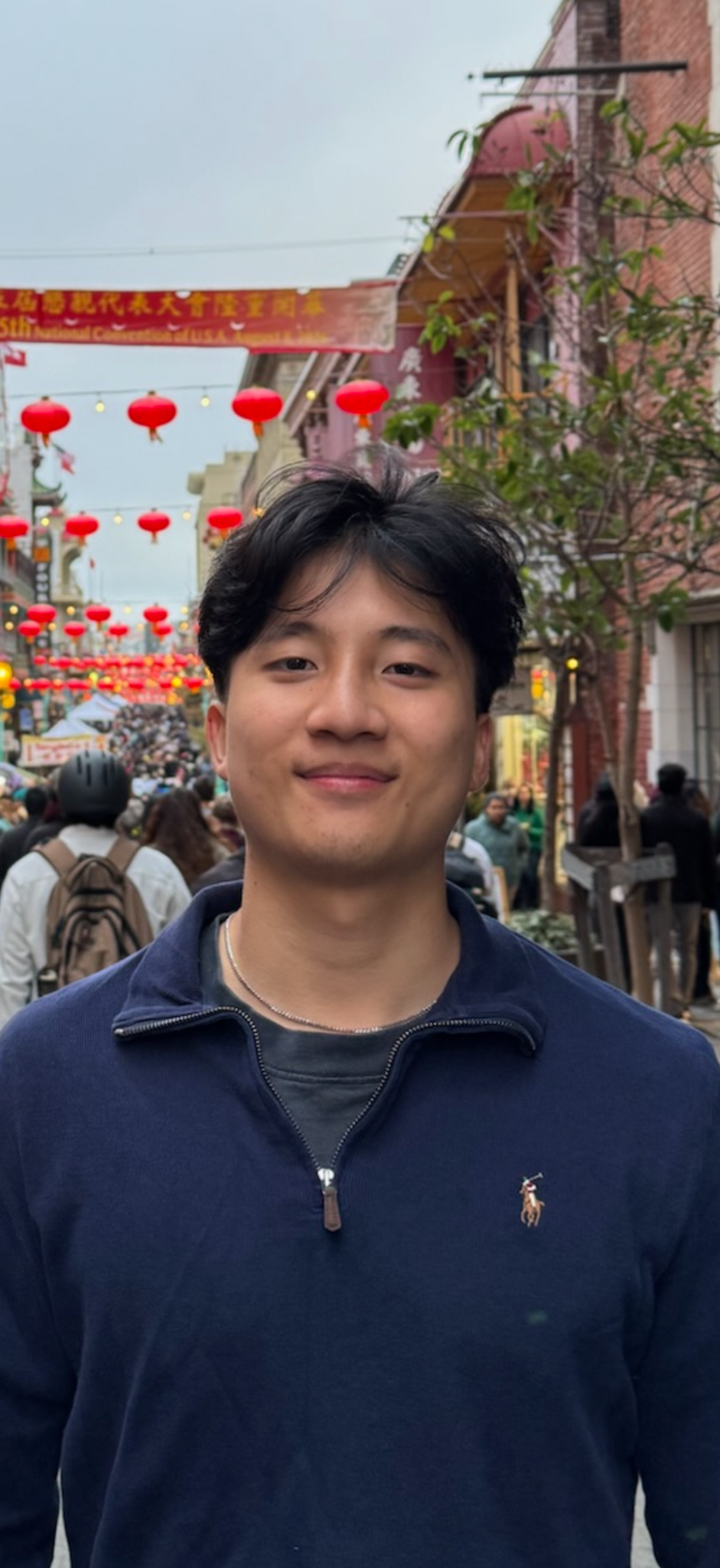
About
I’m a rising junior at Yale University studying Molecular Biophysics & Biochemistry and Applied Mathematics. I’m interested in computational chemistry, computational biology, and machine learning.
During summer 2026, I worked as a software engineering intern at OnyxPoint Global Management and conducted research through the NYU Simons Center for Computational Physical Chemistry REU in the Hocky Group. At Yale, I’m part of the Kueh Lab, which studies the molecular circuits that shape immune-cell decisions.
Research
Built and evaluated a scalable pipeline for classifying simulated colloidal crystals, matching known structures, and flagging unfamiliar structural families for further investigation.
Using stochastic simulation and mathematical models to reason about how immune cells integrate signals, proliferate, differentiate, and form memory.
Selected projects
Tank Duel
I built a tank-combat environment and trained a neural agent to navigate, aim, dodge, and fire around ricocheting bullets. Demonstrations initialize the policy; PPO refines it, with physics-based safety masks to reduce self-hits.
The green tank is the latest selected agent, facing an earlier trained agent in a maze. This is a recorded match, played at normal speed (1×).
Fixed-map benchmarks against scripted and frozen neural opponents; not a human win rate or a guarantee of safety.
Starting on opposite sides of a wall, both agents move toward an opening and exchange fire. Each fires three shots; green wins without a self-hit. Use the video controls to pause or replay.
BioMedCLIP × BloodMNIST
I compared zero-shot predictions, a classifier trained on frozen image embeddings, and partial fine-tuning of BioMedCLIP. Updating the final visual transformer block, normalization, projection, and classifier improved performance on eight blood-cell classes.
Same test set. More useful representations.
Test accuracy · 0–100% · 3,421 images
Saved results from one completed run. The zero-shot baseline was evaluated on validation data, so it is not included in this test-set comparison.
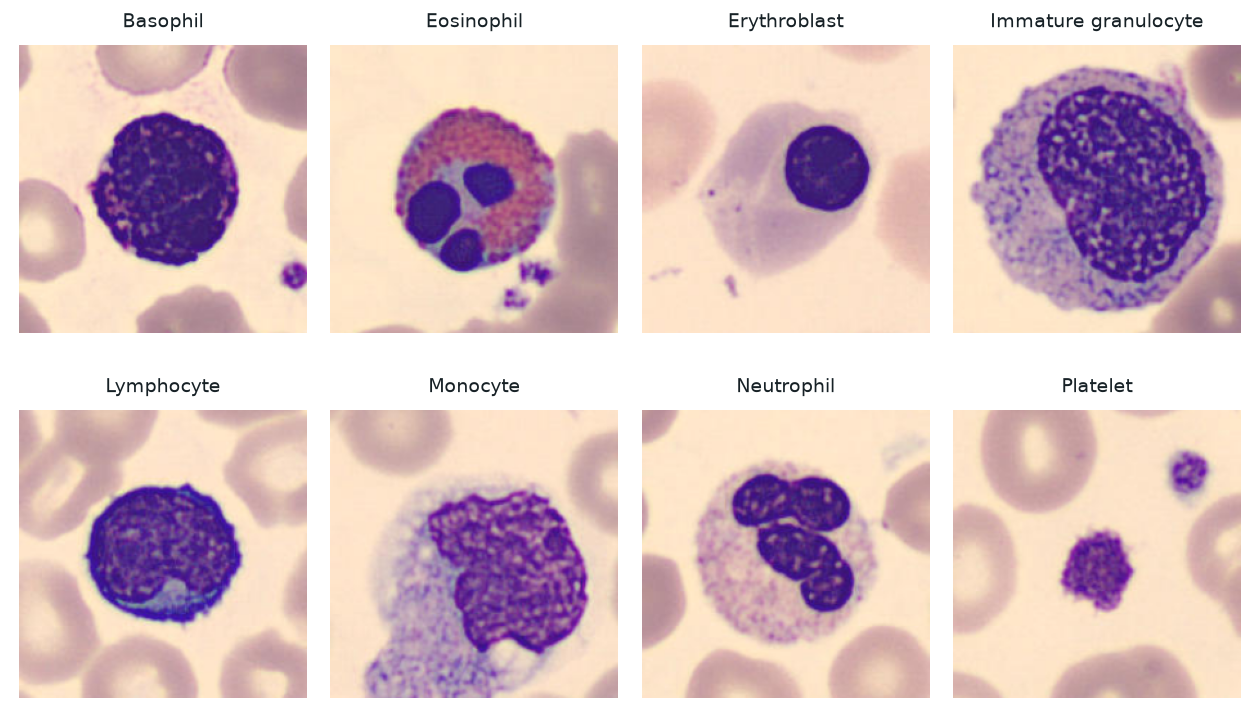
Dataset: BloodMNIST / MedMNIST. An image-classification benchmark, not a clinical application.
Teaching
Machine Learning Through Food
Students turn their own taste ratings into a dataset, then train models to predict enjoyment—from linear regression to a small neural network.
Inside the class E5492
More projects
Off the bench
I keep notes on ideas, papers, and questions that I want to return to.